Tunisian Olive Oil
Tunisia has established itself as the third-largest global exporter of olive oil, an achievement that highlights the vital importance of this sector to the national economy. Tunisian olive oil exports generated 4.5 billion dinars in the first eight months of 2025, representing a significant 53% of the country’s agri-food exports across 66 international markets. The olive sector is fundamental, covering one-third of agricultural land and providing total or partial income to more than 309,000 producers.
To strengthen its global position, Tunisia has launched an ambitious national promotion program for 2026. The main objective is to bolster the presence of Tunisian olive oil in international markets and diversify its export destinations. This program includes an intense communication strategy, featuring media materials and an advertising campaign promoting the “Made in Tunisia” seal. Additionally, a National Prize for the best bottled Tunisian olive oil will be introduced for the 2025-2026 campaign.
The initiative seeks to expand export markets toward priority destinations such as China, the United Kingdom, Latin America, and the Gulf countries, while also targeting Sub-Saharan Africa and Russia. There are plans to maximize product visibility through the early booking of national pavilions at key trade fairs.
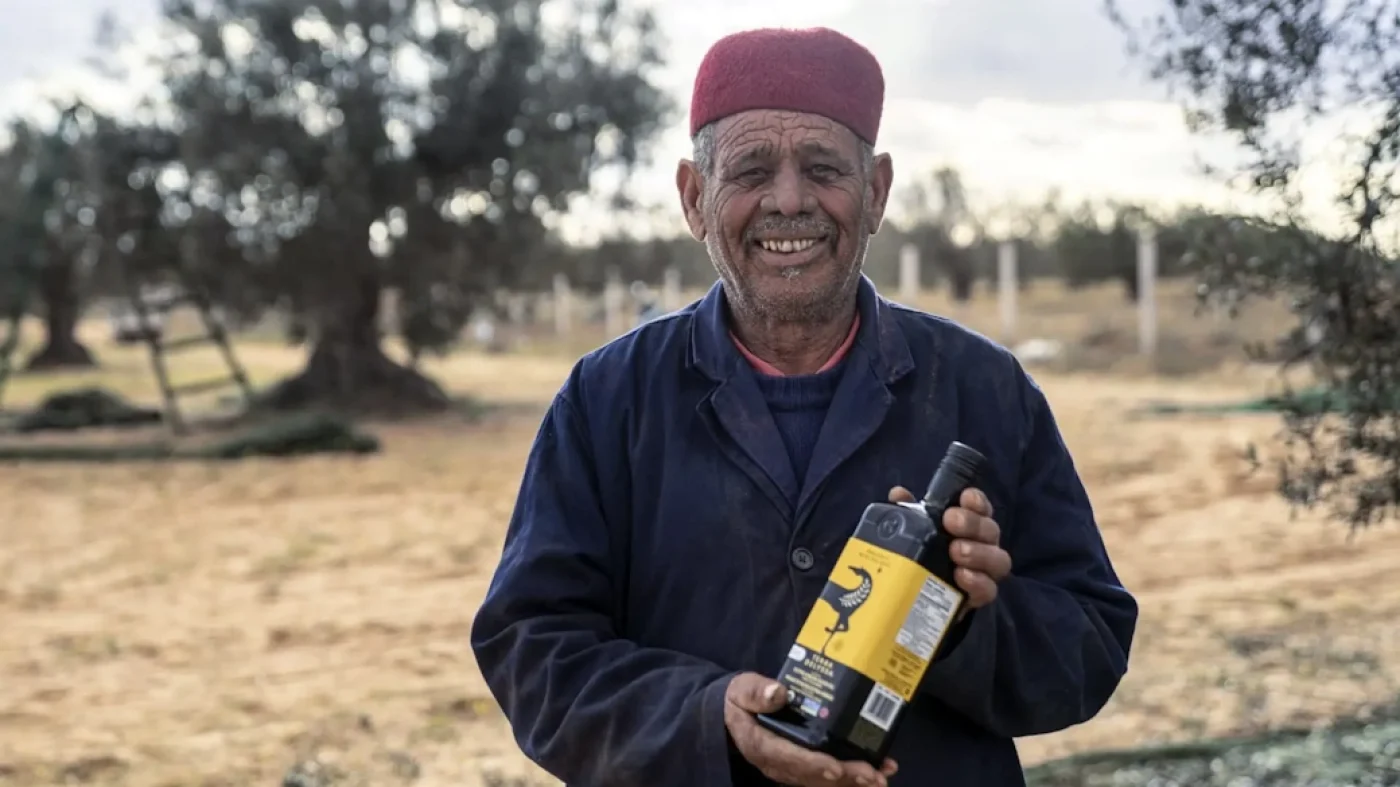
Historically, the Tunisian government has promoted high-quality Tunisian olive oil through agri-food investments and innovative marketing, focusing on the transition from mass production to bottled oils. Training programs have encouraged environmentally sustainable production, improving biosecurity and product quality.
Recent results are promising: in the first months of 2025, Tunisian olive oil exports reached 280,000 tons, valued at 3.750 billion dinars, accounting for more than 50% of agricultural and food exports. In November 2024, export revenues rose by 16.6% to 281 million dinars, thanks to a 47% increase in exported volumes (14,781 tons), despite a 20.6% drop in prices. Exports of bottled Tunisian olive oil experienced a 30% growth, totaling 2,500 tons valued at 67 million dinars. The new 2026 program seeks to solidify Tunisia’s global status and support local producers in accessing high-value export markets, driving the sustainable economic development of the sector.
Tunisia: The New Olive Oil Giant
Tunisia is on track to mark a historic milestone in the global agricultural sector. According to an article published in early January 2026 by the prestigious British newspaper Financial Times, the North African country is in a position to become the second-largest producer of olive oil in the world during the 2025-2026 campaign. This rise would place Tunisia only behind Spain, surpassing for the first time a traditional competitor and industry giant like Italy.
Record production projections from the Financial Times estimate that Tunisian production will fluctuate between 380,000 and 400,000 tons. However, some national sectors are even more optimistic, projecting an exceptional harvest that could reach 500,000 tons. This volume not only represents a significant increase compared to previous years but also contrasts with the situation in European countries like Italy, whose harvests have been seriously diminished by prolonged droughts and climate stress.
Factors of Success This success is attributed to two main factors:
- Favorable climatic conditions: Tunisia has enjoyed well-distributed rainfall, which has boosted productivity after years of difficulties.
- Agricultural infrastructure: The country has an immense olive-growing heritage of approximately 107 million olive trees spread across 2 million hectares. In fact, 40% of the cultivated land in Tunisia is dedicated exclusively to olives.
Although Tunisia historically ranks fourth in multi-year averages, its ability to climb to second place demonstrates its strategic potential. Currently, Tunisia is already the second-largest global exporter of olive oil.
The current challenge for the country lies in the valorization of the product. The government and investment agencies are encouraging the shift from bulk exports to bottling at the source, strengthening organic production, and obtaining quality designations. According to experts, this year will be remembered as the “golden age” of Tunisian agriculture, consolidating olive oil not only as a commercial product but as a symbol of sovereignty and a national economic engine.