

Cretan EVOO: tradition, properties and the secret of Greek olive oil
The history of olive oil in Greece doesn't begin with civilization, but much earlier. Archaeological findings have revealed fossilized olive leaves on the islands of Euboea and Santorini dating back thousands of years (around 50.000 to 60.000 years ). This demonstrates that the tree is native to the Aegean region . However, the transition from a wild tree to a domesticated crop was a process that took millennia.
Direct offer from the olive mill!
Purchase Extra Virgin Olive Oil from Madrid
Take advantage of the best price on your online order with the highest quality premium Madrid EVOO, a juice of selected olives with an exceptional gourmet profile.

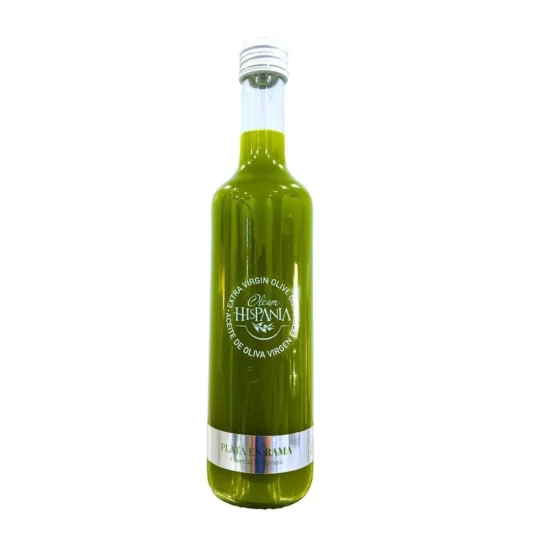
Buy Oleum Premium Extra Virgin Olive Oil from Madrid at the Best Price!
The first evidence of humans harvesting wild olives appears in the Neolithic period , but it wasn't until the Bronze Age that it transformed into an industry. This shift was fundamental to the development of complex societies in the Mediterranean, marking the beginning of an era where agriculture defined the power of nations.
The ancient olive-growing tradition on the island of Crete
It is impossible to discuss the history of olive oil without mentioning the island of Crete. It was there, around 3500 BC , that the Minoan civilization perfected olive cultivation. For the Minoans, olive oil was not just a food, but the foundation of their economy and wealth. Cretan olive oil became the most valuable export of the time, transported in large jars called pithoi to Egypt and the rest of the known world.
Cretan oil was not only consumed; it was used as fuel to light palaces (such as Knossos), as a base for perfumes and medicines , and as a cosmetic product for personal hygiene. The wealth generated by Cretan oil allowed the Minoans to build one of the most advanced and artistic cultures of antiquity, establishing a standard of quality that endures to this day.
Mycenaeans and trade expansion
Following the decline of the Minoans, the Mycenaeans in mainland Greece adopted and expanded these practices. Clay tablets written in Linear B script, found in palaces such as Pylos and Mycenae, frequently mention olive oil. These accounting records detail the use of oil in religious rituals and as payment for workers.
The Mycenaeans took the olive oil trade to a more aggressive international level, dominating the maritime routes. Olive oil was the lubricant of the Bronze Age economy, functioning almost as a universal currency.
Laws and mythology in classical Greece
In classical times, the olive tree was elevated to a sacred status. According to mythology, the goddess Athena won the patronage of the city of Athens by gifting its citizens the first cultivated olive tree, a present considered more valuable than Poseidon's salt spring. This sacred tree was protected by strict laws; in Solon's time, anyone who uprooted or destroyed an olive tree could be condemned to death or exile.
The Olympic Games also revolved around this tree. The prize for the winners was not money, but a crown of wild olive branches ( kotinos ). Furthermore, at the Panathenaic Games, athletes received amphorae filled with high-quality olive oil, a prize worth a small fortune. The oil was essential for the athletes, who rubbed it on their bodies to protect their skin from the sun and to make their muscles stand out during competition.
Medicine and health according to Hippocrates
Hippocrates, known as the father of medicine, recognized the healing properties of olive oil more than 2.400 years ago. In his treatises, he mentioned over 60 medicinal uses. He used it to treat skin conditions, wounds, muscle pain, and digestive problems. For the ancient Greeks, olive oil was the "great therapist."
This medicinal view has persisted throughout the centuries. Today we know that the ancients were right: extra virgin olive oil is rich in antioxidants and healthy fats that protect the heart and prevent cellular aging, something that was already suspected in classical Greece when observing the longevity of those who consumed it regularly.
Byzantine Period and the Church
With the arrival of Christianity and the Byzantine Empire, olive oil acquired a new spiritual dimension. It became a central element of the sacraments, especially baptism and confirmation. Furthermore, oil lamps illuminated churches and monasteries, symbolizing divine light.
During the Middle Ages, Greek monks were the guardians of cultivation techniques. In the monastery olive groves, the best varieties were selected, ensuring that the quality of the product did not decline despite the constant wars and invasions the region suffered. Olive oil remained the cornerstone of the Mediterranean diet, combined with bread, legumes, and vegetables.
Centuries of occupation and resistance
During the centuries of Ottoman occupation, the olive tree was a symbol of the resilience of the Greek people. For rural families, an olive grove represented survival. It was a source of food that didn't spoil easily, it provided light, and the residue from pressing the olives was used to heat homes.
The olive tree was property inherited from parents to children with almost religious reverence. It was said that "if you take care of the olive tree, it will take care of you." This emotional and economic connection helped preserve Greek identity in difficult times, keeping alive the agricultural tradition that would define the modern state after its independence.
Modern industry and supreme quality
Greece is currently the world's third-largest producer of olive oil, but it leads in one fundamental aspect: quality. While other countries produce large quantities of lower-grade oil, Greece stands out because the vast majority of its production (over 80%) is of the "Extra Virgin" category.
The sector has undergone a radical modernization. Stone presses have given way to stainless steel centrifuges that extract the oil cold to preserve all the polyphenols. However, the essence remains the same: small family farms, hand-harvesting in many areas, and a deep respect for nature's cycles. Cretan olive oil , in particular, continues to be recognized globally with numerous Protected Designations of Origin (PDOs) , maintaining its prestige since Minoan times.
Looking for an authentic extra virgin olive oil, rich in natural antioxidants for your health? Direct from the olive mill to your table.

View Gourmet Organic Selection
Conclusion and future
Olive oil is, ultimately, the common thread running through Greek history. It has gone from being a prehistoric wild plant to a Minoan economic engine, a classical sacred symbol, and a modern superfood.
Today, the challenge is climate change, but the olive tree, an extremely resilient tree, still stands. For Greece, olive oil is not just a commercial product; it is its heritage, its health, and its identity. Every drop of Greek olive oil carries with it 5.000 years of history, culture, and the dedication of a people who learned, before anyone else, to extract gold from trees. The legacy of olive oil from Crete and the entire Hellenic territory continues to be the gold standard of the Mediterranean diet worldwide.