


Why does Deoleo remain the undisputed leader in EVOO sales?
Olive oil giant Deoleo is undergoing a period of transformation and consolidated leadership. After overcoming years of volatile raw material prices, the Spanish multinational has reaffirmed its position as the world's number one olive oil company. Its current strategy, called "EVOO-lution," not only seeks financial efficiency but also aggressive expansion in emerging markets and diversification into sectors such as cosmetics.
Traditional flavor at the best price! Original Lechín variety
Enjoy the perfect balance and fruity aroma in your kitchen with our Lechín extra virgin olive oil
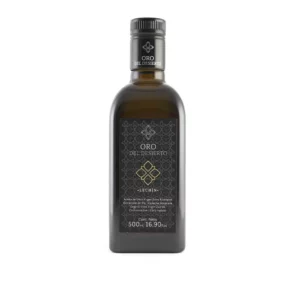
How has Deoleo consolidated its leadership in the EVOO sector?
Deoleo is a Spanish multinational with a heritage that dates back to historic brands and mergers (such as that of SOS and Cuétara, which gave rise to the current structure). By 2026, the company defines itself as a "value aggregator" rather than simply a volume marketer.
Following a successful debt refinancing in 2025 and a substantial improvement in its EBITDA—which reached €50 million at the close of the last fiscal year—the company has managed to reduce its leverage and focus on profitability. Its business model is based on selecting the best global harvests (primarily from Spain, Italy, Greece, and Tunisia) and subsequently refining and packaging them according to premium quality standards.
World-renowned brands
The heart of Deoleo lies in its brands. The company owns some of the most recognized and historically significant brands in the sector:
- Bertolli: It's the world's best-selling olive oil brand. With Italian origins, it's Deoleo's flagship product in markets like the United States and Northern Europe. In recent years, it has innovated with formats such as air fryer sprays and sustainable packaging.
- Carbonell: Probably the most iconic Spanish brand internationally. A leader in the Spanish domestic market and with a long-standing presence in more than 70 countries, Carbonell represents culinary tradition and versatility.
- Carapelli: Focused on the segment premium and high-end. This Italian brand positions itself in the niche of Extra Virgin Olive Oil (EVOO) of author, with a strong presence in specialty establishments and luxury gastronomy.
- Hojiblanca: A leading source in Spain for consumers seeking specific flavors and single-varietal oils, it has become a cornerstone of consumer education on the different sensory profiles of olive oil.
- Figaro: Absolute leading brand in the India, where it holds close to 80% market shareIt is a key piece in the expansion strategy towards Asia.
- Other brands: The portfolio is rounded out with regional and tactical brands such as Koipe (highly valued for its performance in frying in Spain), Sasso (Italia) St. George y Louis (specializing in vinegars and sauces).
International presence
Deoleo operates in more than 70 countries and has strategic production plants in Spain (Alcolea, Córdoba) and Italy (Tavernelle). Its global footprint is divided into three strategic pillars:
United States
It is the company's most profitable market. Despite tariff challenges, Deoleo has strengthened its distribution in the Northeast and Mid-South regions. Its strategy here focuses on the retail channel, working with giants like Walmart, Costco, and Whole Foods , where its Bertolli and Carapelli brands are dominant.
India
India has become Deoleo's innovation "laboratory." In addition to the food applications of the Figaro brand, the company has found that 55% of its volume in the country is used for cosmetic purposes (skin and hair care). By 2026, the goal is to double the number of points of sale, from 250.000 to 450.000, supported by specialized local teams.
The Horeca and digital channel
Domestically and internationally, Deoleo has boosted its sales in the hospitality sector (hotels, restaurants, and cafes) with a 30% growth . Furthermore, digitalization has allowed direct sales and e-commerce to gain traction, especially for the limited editions of premium extra virgin olive oil from Carapelli and Carbonell.
Competition
The olive oil market is highly fragmented, but Deoleo faces three types of competitors:
Large Industrial Groups
-
- Sovena (Portugal): It is its main global rival in terms of volume. Sovena is the largest supplier of private label brands to major retail chains (such as Mercadona in Spain under the Hacendado brand).
- Borges International Group: Spanish competitor with a very strong international presence, especially in nuts and oils, with a very solid structure in markets such as the United States and Asia.
- Salov (Bright Food Group): Owner of brands such as Filippo Berio, it competes directly with Bertolli for leadership in the American market and English.
Cooperatives and Producers at Origin:
-
- Dcoop: The world's largest second-tier cooperative. Although it is a raw material supplier, its interest in entering the packaging and branding phase—even with persistent rumors of a possible takeover bid for Deoleo—makes it a critical player in the sector's balance of power.
Private label brands (MDD):
-
- The biggest competitor in terms of volume remains supermarket private labels. Deoleo combats this competition through... differentiation by quality and brandavoiding price wars and focusing on innovation in formats and sustainability.
Looking for an authentic extra virgin olive oil, rich in natural antioxidants for your health? Direct from the olive mill to your table.

Sustainability and Health
By the end of 2026, Deoleo is projected to be a company with an impeccable balance sheet and a health-focused narrative. The use of components such as polyphenols (oleocanthal and hydroxytyrosol) and the certification of its sustainability processes (ISO and carbon footprint) are now its main marketing tools to justify its premium price compared to lower-quality seed oils.
In conclusion, Deoleo has gone from being a company in restructuring to an agile leader that dominates the table of global consumers, from traditional Spanish cuisine to beauty rituals in India, always keeping olive oil as the central axis of its identity.


