

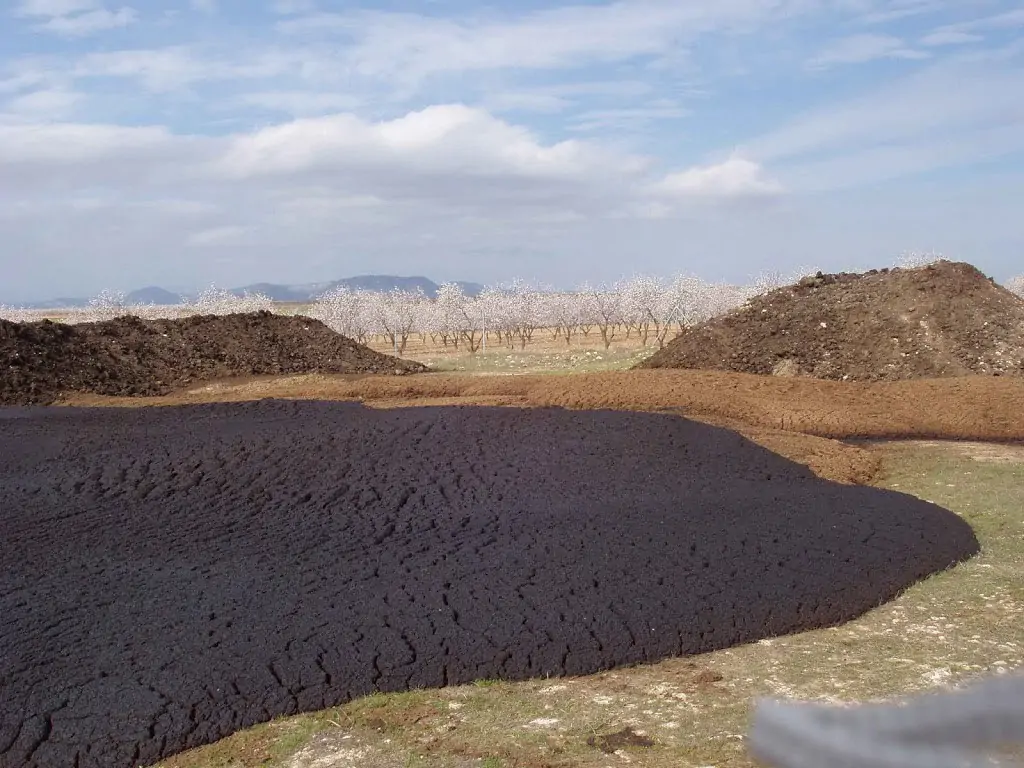
Tunisian innovation to valorize EVOO waste
Tunisia, aware of the environmental challenge posed by the byproducts of its vast olive oil sector, is firmly committed to research and innovation to transform a traditional activity into an engine of sustainable and competitive development . This nation, a world leader in the export of organic olive oil , has identified the valorization of olive oil production waste as a key strategy.
Enjoy the authentic flavor at the best olive mill price!
Buy Extra Virgin Olive Oil with Sierra de Segura Designation of Origin
Bring to your table a gourmet high mountain EVOO, certified for its unparalleled freshness and characterized by an extraordinary green fruitiness that will captivate your senses.

Discover Fuenroble Picual Temprano, Special Edition on Sale!
The Euro-Mediterranean OLIWA project
A key element in this effort is Tunisia's participation in the Euro-Mediterranean OLIWA project , funded by the European Union. This pan-European program's primary goal is to transform the large volume of olive oil production waste into high value-added products.
Coordinated by the University of Turin, OLIWA brings together six Mediterranean countries (Italy, Spain, Greece, Turkey, Algeria, and Tunisia) and a total of 25 institutional and technological partners, demonstrating a regional commitment to the circular economy . The aim is to move beyond the current agricultural model, which generates large quantities of waste, towards a system where olive mill wastewater (alpechins) and other olive byproducts, historically viewed as pollutants and difficult to manage, are reused in creative and innovative ways.
How is innovation transforming EVOO waste into valuable resources?
The OLIWA project opens up a range of possibilities for the reuse of this waste, taking it to various sectors:
- Animal Feed and Aquaculture: The use of olive waste as a substrate for the insect breedingwhich in turn would be transformed into flour for animal feed. This not only provides a sustainable source of protein but also reduces dependence on other resources.
- Food Additives: One of the high-value routes is the extraction of natural components present in the waste. These components can be used as additives in the food industry, taking advantage of their beneficial properties.
- Sustainable Materials: The project also includes the manufacture of durable packaging materials From this waste, a line of research in which the Spanish technology center AIMPLAS, specializing in polymers, actively participates.
- Energy and Biogas: The production of biogas by combining agricultural waste, including olive waste. This is a way to generate renewable energy from what was previously a management problem.
Strategic impact for Tunisia
For Tunisia, a country with a strong olive-growing tradition, the OLIWA project and its innovative approaches are of strategic importance . They directly address the environmental challenges generated by the industry and, simultaneously, open new economic opportunities in the green and innovative sectors.
The regional goal, supported by partners like AIMPLAS, is ambitious: to reduce food waste by 25% and strengthen sustainable value chains throughout the Mediterranean basin. By investing in these technologies, Tunisia is not only addressing a pollution problem but also reaffirming its commitment to transforming its traditional olive oil industry into a powerful , competitive economic engine aligned with sustainability principles . This approach positions the country at the forefront of agricultural waste valorization.
Looking for an authentic extra virgin olive oil, rich in natural antioxidants for your health? Straight from the olive mill to your table.

Innovation in the management of olive pomace
A team of Andalusian researchers from the University of Granada and the Institute of Fat has developed an innovative electricity- based system to transform alperujo , a massive waste product of olive oil production , into high-value industrial resources.
Application of electrodialysis
Using the electrodialysis technique , which acts as a selective filter driven by electric current , scientists were able to directly separate and concentrate volatile fatty acids from a real fermented olive pomace, achieving a recovery rate of 55%.
Technical advantages over traditional methods
This process stands out for its high energy efficiency , achieving an electrical efficiency of 86%. Unlike distillation or the use of chemical resins, this technology uses only selective membranes , which significantly reduces energy consumption and simplifies industrial scaling.
New opportunities for the olive sector
The recovered raw materials can be used to manufacture bioplastics , cosmetics , hygiene products, and cleaning products. This technology opens the door to converting olive oil mills into biorefineries , providing a valuable economic benefit and enhancing the sector's sustainability .


