
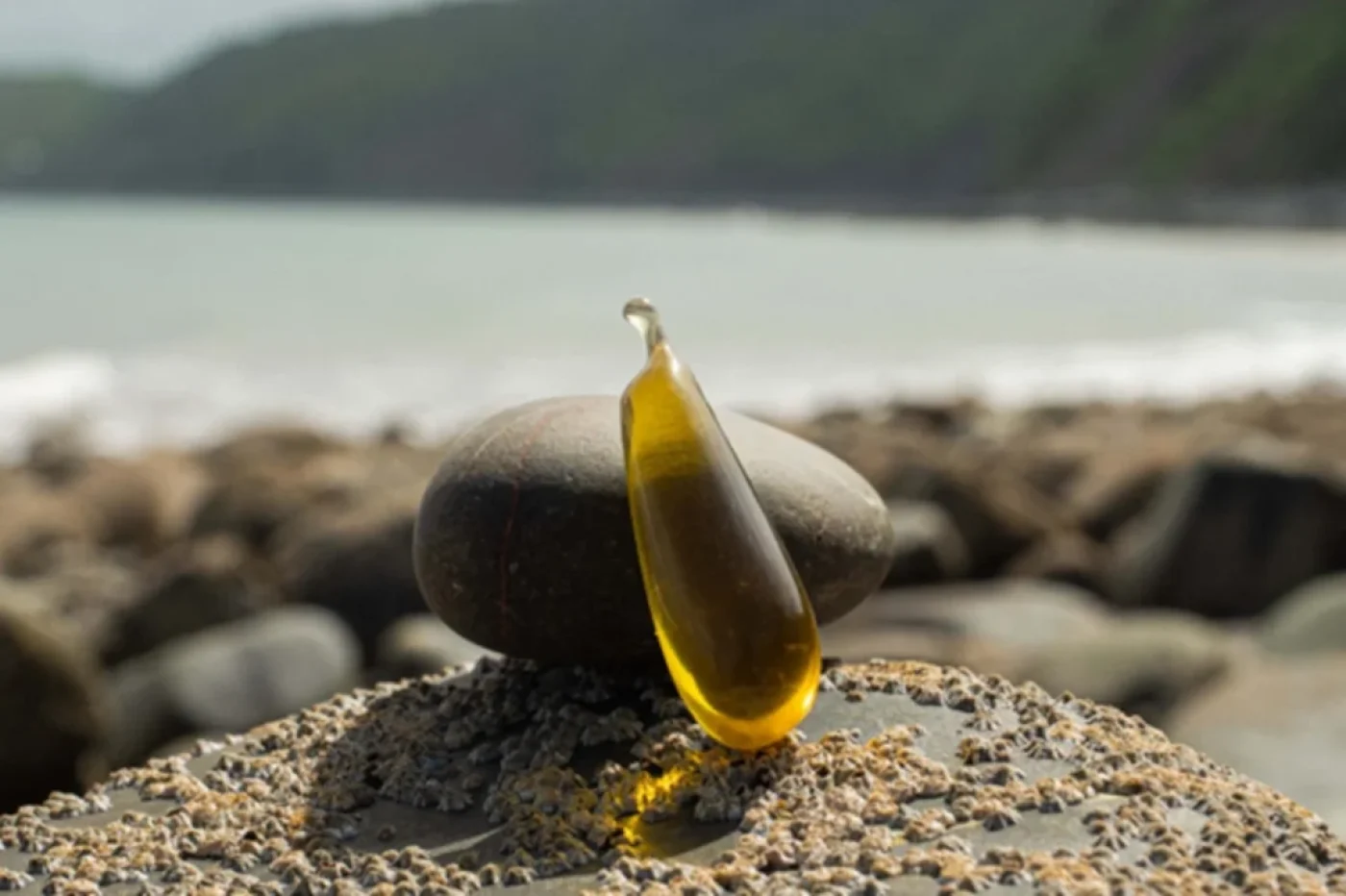
This is a collaboration between Cypriot olive oil company Oleaphen and British algae packaging company Notpla to create a 5ml single-dose olive oil packed in edible algae, which represents a breakthrough in oil production and packaging.
Oleaphen olive oil is produced in Cyprus using regenerative farming practices, while the algae is harvested in the UK and transformed into an edible polymer.
The single-dose packaging resembles a pipette filled with olive oil that can be squeezed directly into the mouth or mixed directly into smoothies or teas. The capsules can also be used to drizzle olive oil over salads or consumed together, with the packaging included.
The collaboration combines Oleaphen’s soil ecosystem restoration systems in olive oil production with Notpla’s algae-based eco-friendly packaging, benefiting terrestrial and marine environments while improving human health. This represents the convergence of two regenerative systems.
Oleaphen’s CEO, a soil biologist, is considered an expert in olive oil production and aims to accelerate the global transition to sustainable systems. Notably, his “Kot-Kot” project uses the droppings of his free-range chickens to fertilize his olive groves and enrich the soil without the use of artificial fertilizers.
The edible algae is produced in the UK.
Oleaphen’s agricultural approach rebuilds soil microbial communities, producing olive oil with 30 times more polyphenols (a compound known to improve cardiovascular health and the immune system) than conventional olive oil.
Studies on the health benefits of olive oil polyphenols show that they strengthen cardiovascular health and protect against degenerative diseases, among other benefits.
Environmental assessments show that the regenerative agriculture system established by Oleaphen removes 16 kg of carbon dioxide from the atmosphere for every liter of oil produced.
The carbon reduction potential of this integrated approach is remarkable. Carefully designed agricultural systems can contribute to the climate solution while producing food with therapeutic potential.
Furthermore, the edible and biodegradable packaging uses seaweed that does not require freshwater, land, or fertilizers, and its cultivation contributes to reducing water acidity and improving biodiversity.
When harvested for beneficial uses like this packaging, seaweed creates a cycle of continuous improvement for marine environments. In the future, innovative seaweed-based materials can help eliminate single-use plastics completely, creating a truly plastic-free world.
Currently, plastic (PET) and glass bottles are predominantly used to package olive oil. According to Netien, olive oil packaged with seaweed has a 90% lower carbon footprint than oil packaged in glass.
Cyprus produces a distinctive Mediterranean olive oil, characterized by a millenary tradition and a modern focus on medicinal-grade quality. Despite its modest production volume compared to giants like Spain, Cypriot oil has carved out a niche as a high-end “superfood.”
Flavor Profile and Varieties
The island’s intense sun and limestone-rich soil shape its unique character. The primary variety is the indigenous Kypriaki, often blended with Koroneiki.
Production and Award-Winning Brands
Cypriot producers prioritize quality over quantity, often utilizing organic and early-harvest methods.
Health Benefits
Cyprus is a leader in “High Phenolic” olive oil. Thanks to early harvesting, these oils contain extraordinary levels of oleocanthal and oleacein. These compounds are scientifically proven to protect blood lipids from oxidative stress and offer powerful anti-inflammatory properties. Many Cypriot oils carry a certified health claim according to EU Regulation 432/2012, labeling them as true “nutraceuticals.”
In summary, Cypriot olive oil is more than a culinary ingredient; it is a premium health supplement prized by chefs and health enthusiasts alike for its purity and potency.
Important Note: aceitedelcampo.com promotes the consumption of extra virgin olive oil for its culinary qualities and health benefits. However, no medication or current treatment should be replaced without the guidance of a healthcare professional.
ALZAYT EXPORT SL
info@aceitedelcampo.com
C/ Eduardo Bosca 19, 2-5
46023 Valencia
Subscribe and receive a coupon by email for your next purchase.